Case Study – 2024
Electronic Medical Record (EMR) Platform
My Role & Approach
I worked across UX design and business analysis on a healthcare platform spanning patient and clinical workflows. I partnered closely with Product, Engineering, business analysts, and stakeholders to translate complex healthcare requirements into clear, usable experiences, helping define requirements, map workflows, and carry solutions from early concepts through production-ready designs. My work focused on making dense health information and operational workflows easier to understand while accounting for accessibility, technical feasibility, and the needs of different user roles.
Outcome
Designed and helped deliver an interconnected healthcare platform spanning patient-facing and operational workflows, including remote patient monitoring and data visualization, establishing clearer patterns for accessing, understanding, and acting on complex health information.
1 - Overview
Simplifying healthcare
Healthcare journeys can often feel complex and overwhelming. I believe technology should help patients better understand and manage their care, while making it easier for providers to support them along the way.
For this project, I served as both UX Designer and Business Analyst, partnering with stakeholders to gather insights, define requirements, and design two key EMR capabilities: payment processing and remote patient monitoring.
2 - Problem
Payment processing and remote patient monitoring
I was responsible for defining requirements and designing payment processing, third-party integrations, and remote patient monitoring capabilities within the EMR platform. While each feature addressed a different aspect of the healthcare experience, they shared a common objective: creating a more connected and efficient ecosystem for both patients and providers.
Prior to modernization efforts, many workflows relied heavily on manual data entry, paper-based processes, and in-person transactions. These inefficiencies created administrative burden and fragmented the overall user experience.
By introducing integrated digital workflows, the new EMR platform enabled patients and providers to access critical information, complete key tasks, and stay connected through both online and in-person interactions. The result was a more streamlined healthcare experience that improved accessibility, efficiency, and continuity of care.
3 - Design Process
Mapping requirements before designing the experience
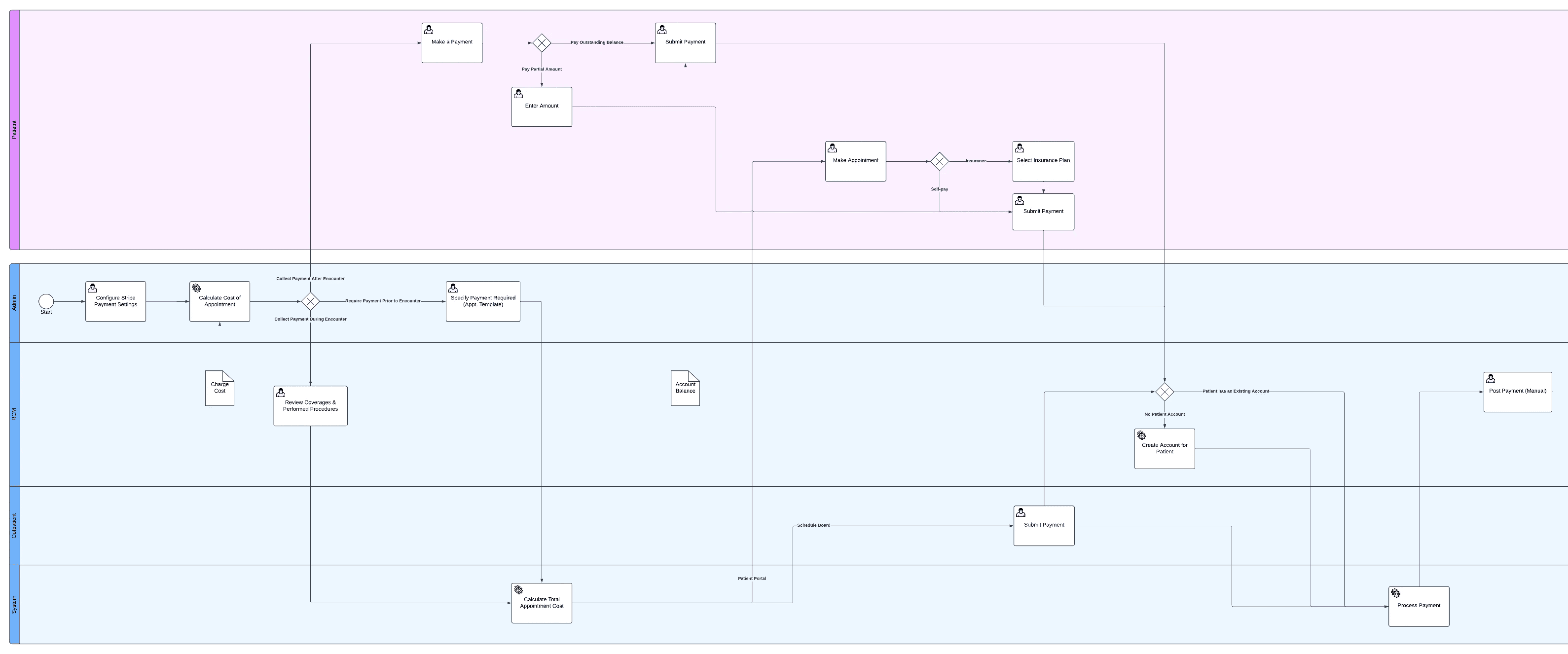
In addition to leading design efforts, I partnered closely with the Product Owner and Technical Lead to define and refine the end-to-end payment processing experience. As part of my responsibilities as a Business Analyst, I developed workflow diagrams and process documentation to align business requirements, technical implementation, and user needs.
These artifacts played a key role in visualizing system interactions, identifying dependencies, and ensuring a shared understanding of how payment processing integrated with the broader EMR ecosystem. By mapping relationships across multiple workflows and touchpoints, the team was able to make informed decisions throughout design and development.
The following diagram illustrates a portion of the payment processing workflow and its connections to other areas of the solution.
Beyond workflow analysis and process mapping, I was responsible for creating detailed requirements documentation, including user stories, acceptance criteria, and functional specifications. These artifacts helped establish a shared understanding across product, engineering, and stakeholder teams, ensuring alignment before development began.
4 - Final Solution
Turning complex requirements into connected workflows
With requirements defined, I transitioned into the UX design phase, translating business needs and user goals into wireframes, user flows, and high-fidelity designs. This end-to-end involvement allowed me to maintain continuity throughout the project, ensuring that the final experience remained aligned with both the original requirements and the needs of patients and providers.
Payment Processing
Payment processing extended far beyond a single screen or workflow. It was embedded throughout the patient and provider experience, impacting everything from appointment scheduling and intake to patient portal interactions and revenue cycle management.
Designing for this level of interconnectedness required a systems-oriented approach that balanced business requirements, operational workflows, and user needs. The result was a streamlined experience that made payment-related tasks easier to complete across the platform.
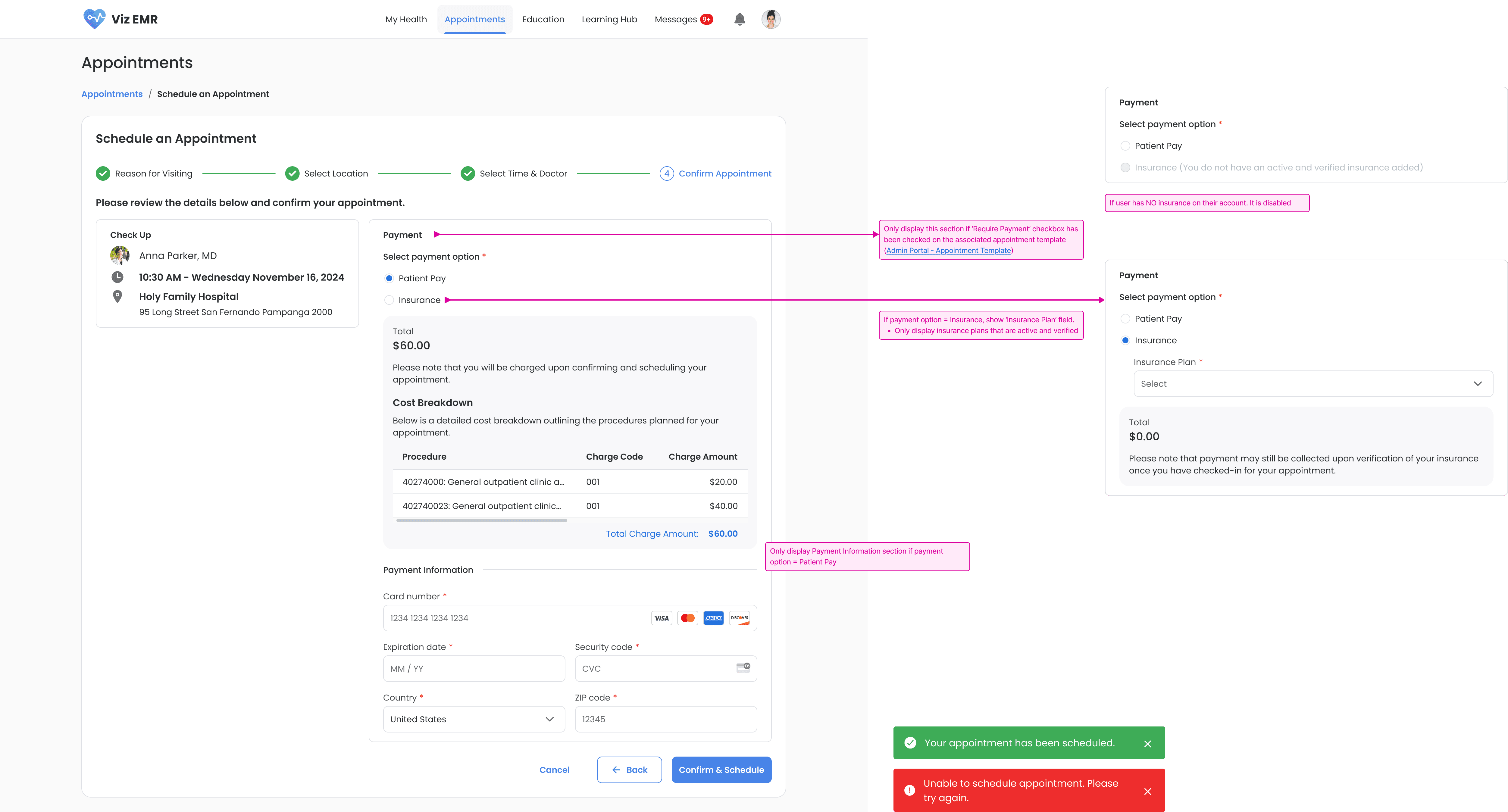
Figure 1. High-fidelity mockups of payment collection within the patient portal.
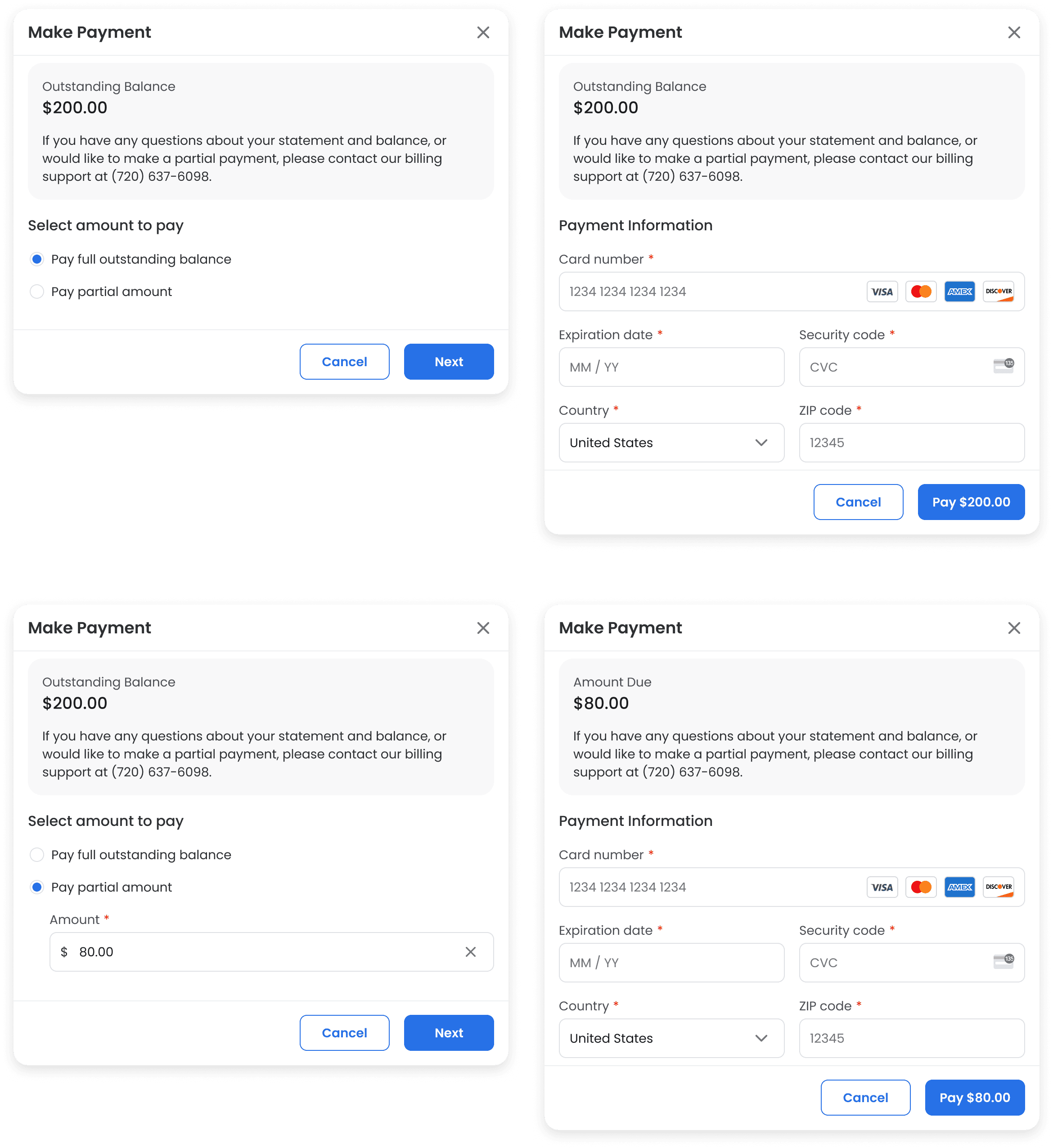
Figure 2. Make Payment modals used across the system.
Remote Patient Monitoring (RPM)
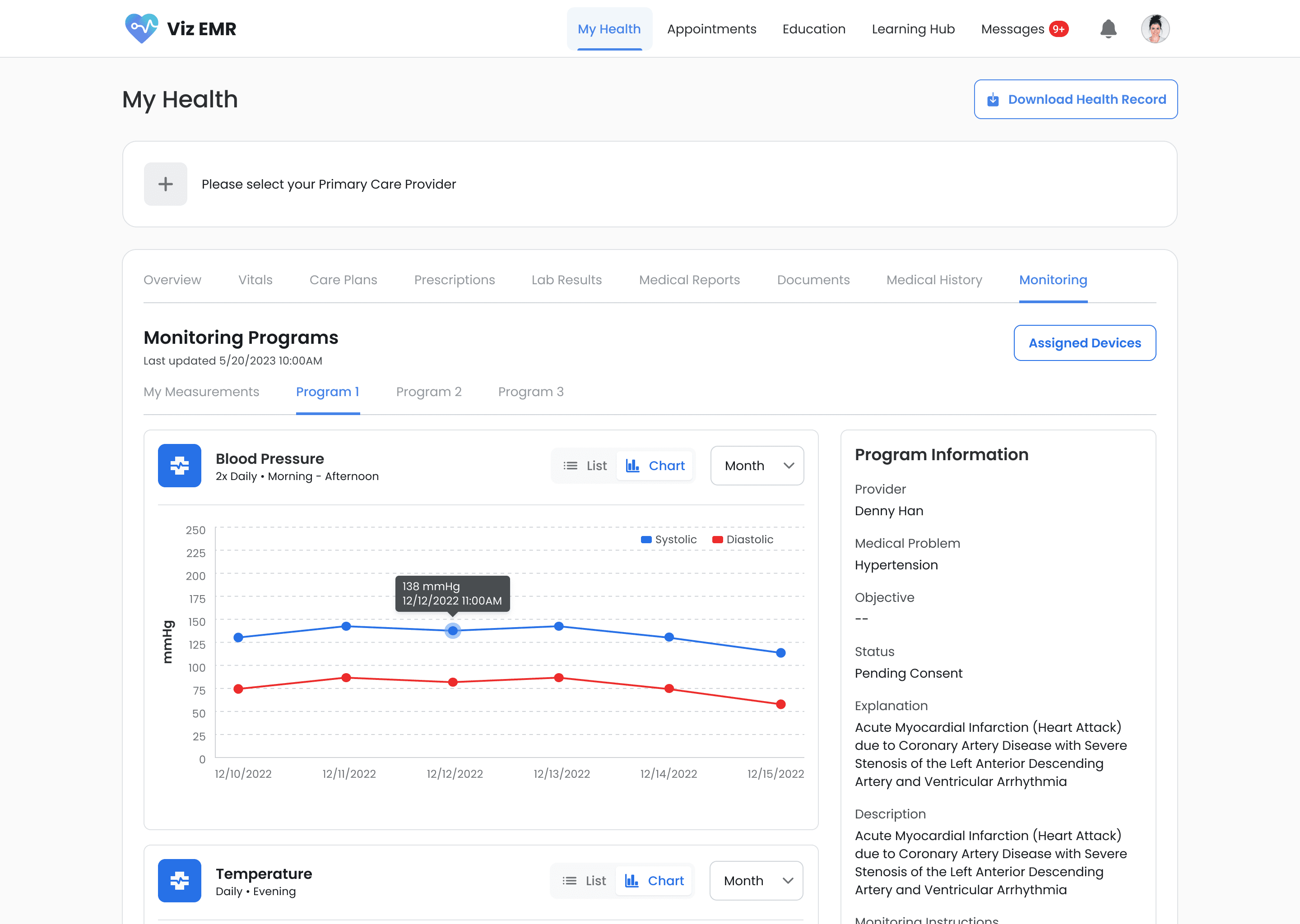
Remote Patient Monitoring (RPM) was one of the most compelling features to design because it created an ongoing connection between patients and providers beyond traditional office visits. By leveraging connected devices, providers could monitor patient health data remotely, enabling more proactive and continuous care.
A key design consideration was ensuring that information remained clear, actionable, and easy to understand for both audiences. Patients needed visibility into their progress, responsibilities, and overall health plan, while providers required efficient access to meaningful data that could support clinical decision-making.
To support these goals, the experience focused on intuitive workflows, clear communication, and effective data visualization. Presenting health metrics in a way that was both informative and accessible helped create a shared understanding between patients and providers, ultimately supporting better engagement and continuity of care.
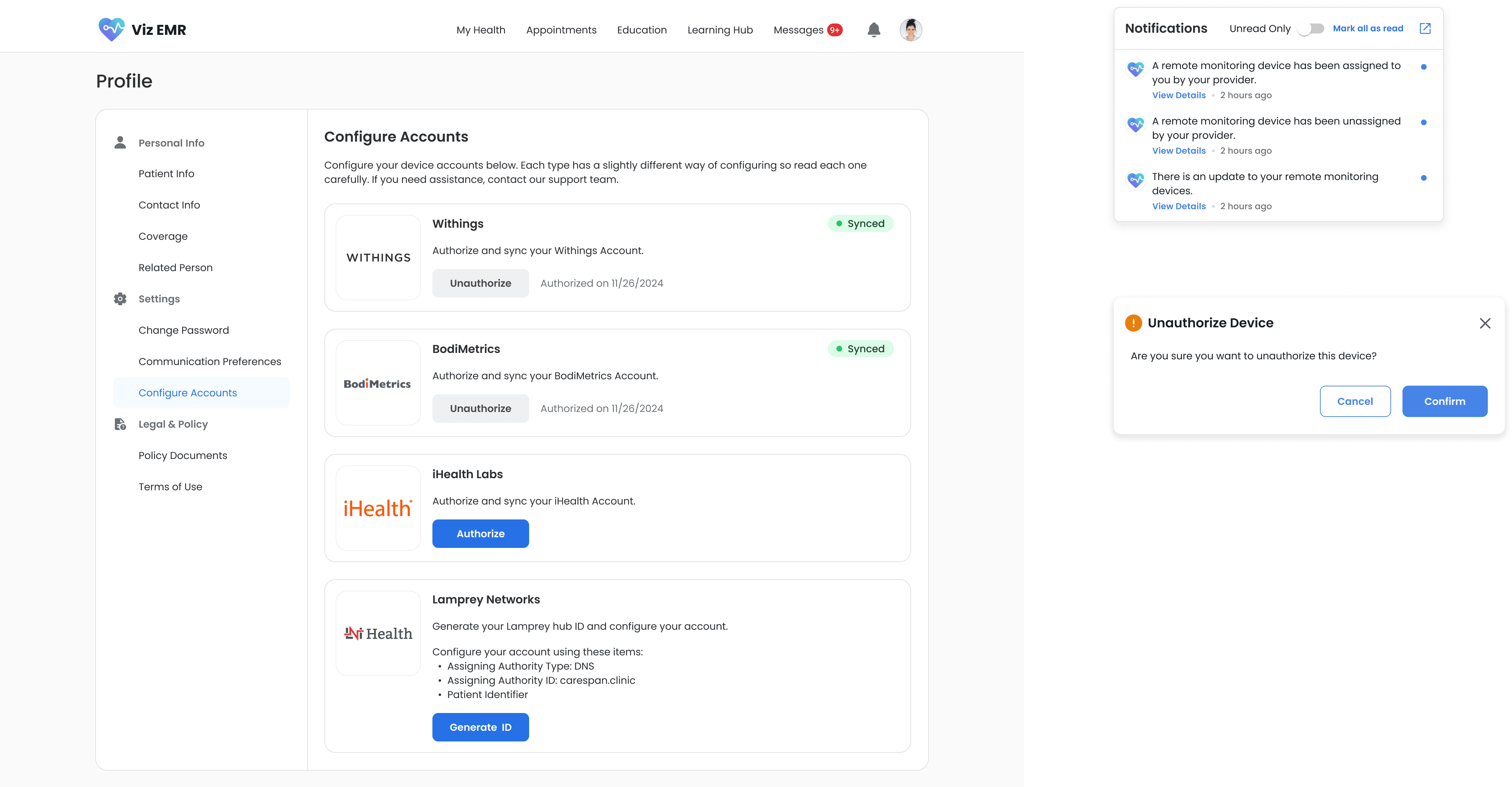
Figure 3. Configure Accounts screen, Notifications list, and Unauthorize Device dialog.
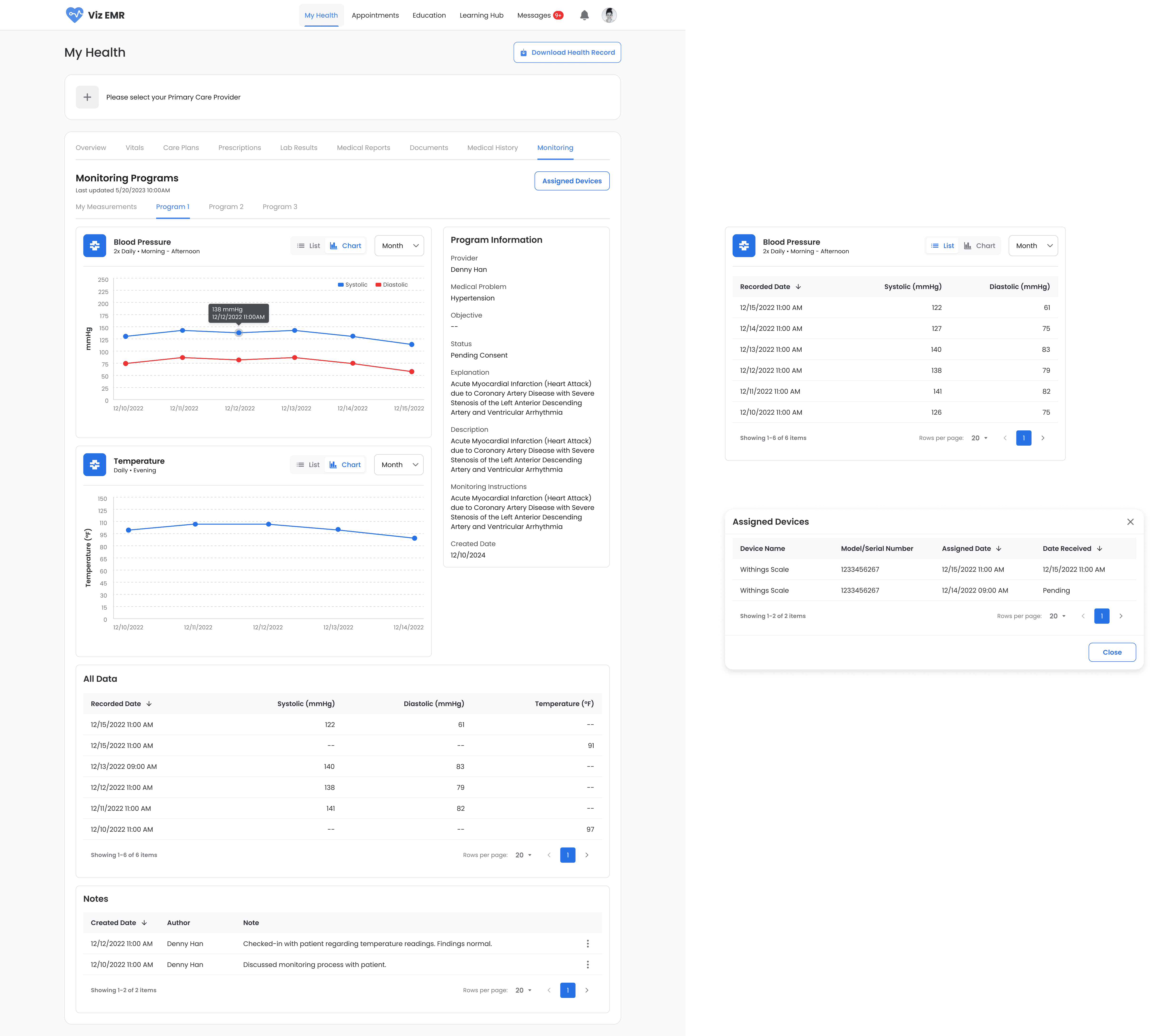
Figure 4. Monitoring screen, data visualization, and Assigned Devices modal.